Why Smart Players Still Lose at Slots (And How to Fix It)
November 06, 2026 - iGaming

November 06, 2026 - iGaming
You have probably seen the meme: someone spins a slot for two hours, hits nothing, then walks to the ATM, comes back, and instantly lands a bonus round. It is funny because it feels true. But here is the uncomfortable reality behind that joke—most slot losses have nothing to do with luck and everything to do with how the game is designed, how players choose stakes, and how little time they spend understanding the math before the reels start spinning.
This is not another lecture about gambling responsibly. You already know that. What follows is a practical, numbers-first look at where money actually disappears in modern iGaming—slots, table games, poker, and sports betting—and what genuinely separates the small group of players who bleed slowly from the majority who donate quickly.
Every slot has a Return to Player percentage. A 96% RTP machine keeps $4 for every $100 wagered over millions of spins—that is the long-run math. The problem is how people interpret it. They read "96% payback" and assume they will get $96 back from their $100. In reality, on any single session you might lose 40%, or double your stack.
Where it gets ugly is variance. A high-volatility slot like Money Train 2 has an RTP around 96.4%, but the vast majority of that return is hidden inside rare bonus rounds. If you feed it $200 at $1 per spin, you are not going to see 96% come back. You are likely to see a steady, grinding drain punctuated by one big hit—if you hit it at all.
Concrete tip: check the help screen before you play. Licensed operators in the UK, Malta, and most regulated markets are required to display RTP. Anything under 94% should make you pause. Also compare the same game at different casinos—providers sometimes release multiple RTP versions, and a high street casino might run 96% while a bare-bones site runs 94%.
Ask ten slot players how they pick their stake and nine will say some version of "I usually do 50 cents to a dollar, then go bigger if I'm hot." That is not a strategy; it is a mood. The players who last for years—yes, some do exist—work the other way around.
Suppose you have a $300 session budget. A simple rule: your base stake should be no more than 1% of the budget for a relaxed session, or 2% if you accept a higher chance of busting out fast. So $300 gives you $3 spins for maximum stay-time, or $6 spins if you are chasing volatility. Anything above 5% and you are essentially buying a lottery ticket with a short clock.
And here is the number that surprises people: on a 96% RTP slot at 500 spins per hour, the house edge reclaims roughly $60 an hour from a $3 spin. Sessions do not end because you "lost your luck"—they end because you kept pressing a button with a predictable drain rate attached.
Poker is a different animal, and this is where genuinely skilled players can actually win. A competent cash game player in a soft $1/$2 live game can realistically earn 5 to 10 big blinds per hour. In online micro-stakes, rakeback and bonus programs can add 20% to 30% to a winning player's win rate—sometimes more, which is why grinder communities obsess over them.
The trap for new players is mixing formats too early. Someone watches a YouTube clip about a high-roller MTT aggro strategy, tries it in a $5 tournament, and gets destroyed by opponents who actually understand ICM. The fix is boring but effective:
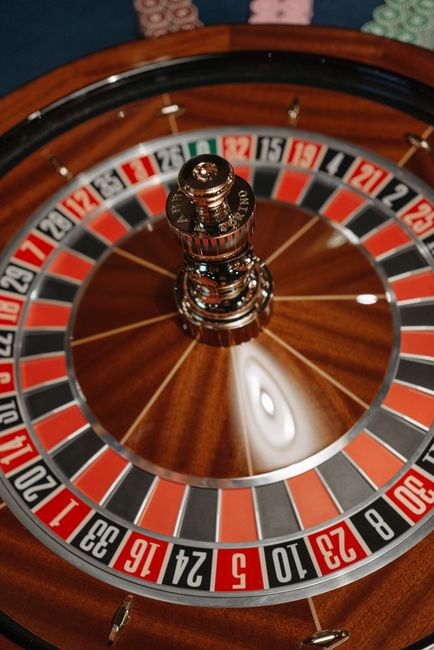
Casinos, outside of advantage play on blackjack under very specific rules, are not beatable. Table game players should focus on the lowest house edge games—baccarat banker at 1.06%, blackjack with basic strategy at 0.5%, craps pass/don't pass with full odds—and treat everything else as paid entertainment. Roulette is a trap because American double-zero runs a 5.26% edge versus 2.70% on European single-zero wheels. That difference over 500 spins is enormous. You can read more about it on mahjong ways.
In iGaming markets, sports betting has quietly become the biggest vertical, and it is also where sharp money lives. The bookmaker margin—also called the vig—usually sits between 4% and 8% on mainstream markets. That means if you bet randomly, you lose on average 4 to 8 cents on every dollar. Beatable? Yes, but only with an actual process.
The people who win consistently do a few things in common:
Welcome bonuses look generous until you read the wagering requirement. A 100% match up to $200 with a 40x rollover means you need to wager $8,000 in real money terms before a cent of bonus becomes withdrawable. On slots with a 96% RTP, the expected loss while clearing that bonus is around $320 in pure machine terms. You might still come out ahead if variance cooperates, but on a 40x non-sticky bonus, the math is precarious. There is a reason operators compete on bonus size—bigger bonus usually means higher wagering and game weightings that exclude the good stuff.
Compare this with a lower headline figure like a 20x rollover. A $200 bonus with 20x and a $1,000 weighting cap often returns more actual value to the player than a flashy 50x offer. Sticky bonuses versus non-sticky also matters significantly—non-sticky keeps your real money separate, so the bonus can expire without dragging your cash with it.
If there is one pattern across every profitable iGaming niche, it is this: the winners obsess over inputs rather than outcomes. They know the RTP, the house edge, the rollover, the closing line, the variance, and their own session rules—all before a single dollar moves. That is the actual game being played. The reels and the betting slip are just the visible part.
None of this makes gambling safe or guarantees wins—nothing does. What it does is separate the players who are essentially paying full price for entertainment from those squeezing a little value back. Learn the rules of the environment before you learn the feeling of a big hit. The hit feels the same either way, but one of those two people can keep doing it for years.
Pick your vertical, learn the numbers cold, set your limits in advance, and treat every bonus and promo as a math problem first. That is how the small percentage who actually survive in this space do it—not with hunches, but with arithmetic.

A rained-off bank holiday is one of the few genuinely free stretches of time most of us get. Here's how to use it...

Everyday mistakes only pay off if you extract the lesson and skip the self-punishment. Here's a practical...
Copyright © 2026 Insight Way. All Right Reserved.