Local Angle: How to Use a Rainy British Bank Holiday for a Personal Reset
October 09, 2026 - Growth


September 30, 2026 - Reflection
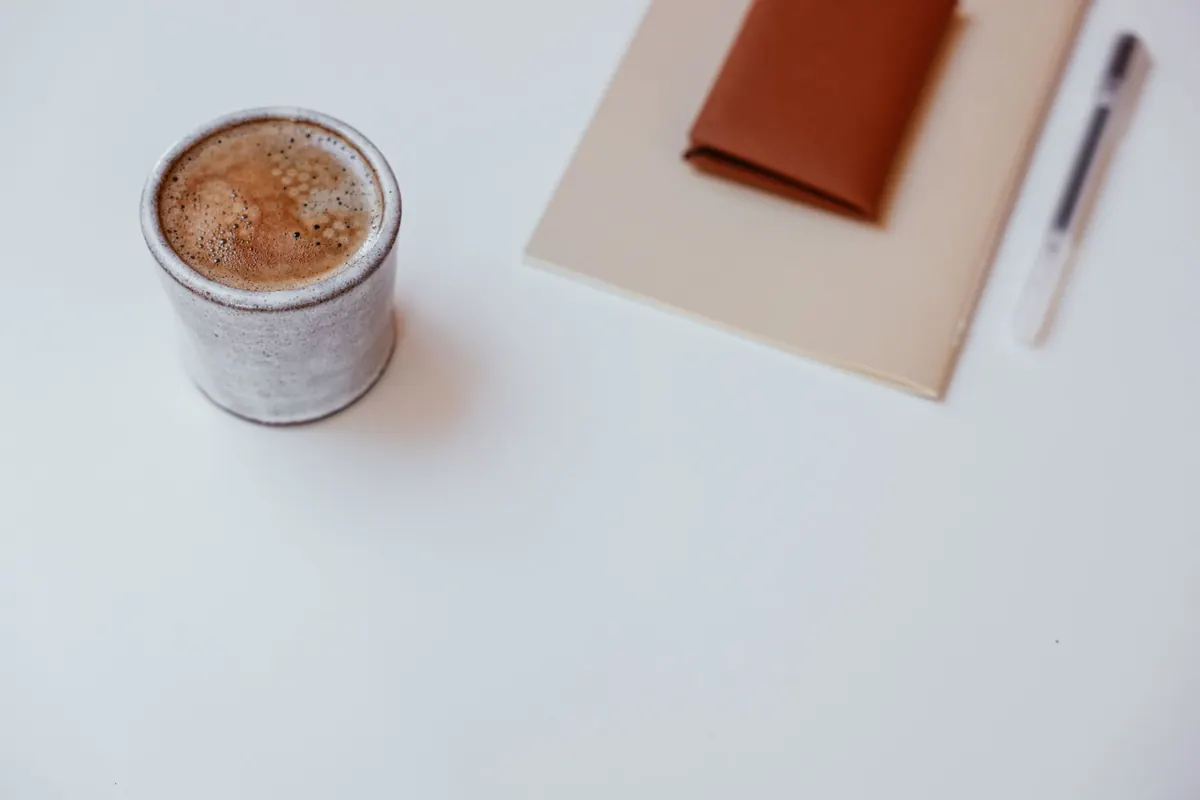
Two notebooks, two times of day, one job: helping you hear yourself think. Morning pages ask you to write before the day gets a word in. Evening journalling asks you to write once it has. Neither is the mature choice and neither is a waste of time, so the useful question is not which practice is better but which one you will still be doing in three weeks.
The practice comes from Julia Cameron's writing programme: three pages, longhand, first thing, before you check a phone or have a proper conversation. You write whatever arrives. No topic, no structure, no editing, and ideally no rereading.
The point is not to produce anything. It is to empty the top layer of the mind so the lower layers get a chance to speak. In practice that tends to look like this. Page one is complaints and a shopping list. Page two is the work problem you have been circling for a fortnight. Page three contains the sentence you did not expect to write, and that page is why people keep going.
Morning pages are strongest when your head is loud on waking, when a decision has gone stale, or when you are avoiding a conversation you know you need to have. The cost is real: twenty to forty minutes depending on your handwriting, plus a morning that begins without input. If you leave the house at half six or share a room with a light sleeper, three full pages can feel like a luxury. Ten minutes of freewriting in the same spirit still does something worthwhile.
Evening journalling is usually shorter and more structured: five to fifteen minutes, often with prompts. What went well? What drained me? Where did I react rather than respond? What is one thing I would do differently tomorrow? Some people keep a running record of the day; others use the same four questions every night and add a line about tomorrow's priorities.
The advantage is detail. By evening you know how the meeting actually went, what the tone of that message really was, whether the walk helped or just delayed the mood. Over weeks you start to see patterns: the days you feel flat, the tasks you keep postponing, the people who leave you energised rather than depleted.
Writing a full inventory of your worries at half eleven tends to make falling asleep harder, not easier. If evening journalling leaves you wired, move it earlier — the kitchen table after dinner works well — and finish with something that closes the loop. One line about what you will do next, or one thing that went right, is usually enough.
Do not decide this from theory. Run it.
These two routines are less rivals than opposites in temperament, and plenty of people end up with a version of both: a short freewrite in the morning to clear the pipes, a few structured lines at night to keep the record. That combination works precisely because each half does what the other cannot.
Whatever you choose, keep the bar low. Five honest minutes beat thirty performed ones. A page is enough, legibility does not matter, and rereading is optional. If a prompt stops working, change it. If you miss a day, start again the next one without a lecture.
One thing worth saying plainly: journalling is a useful tool for reflection, not a substitute for support. If you find yourself writing the same despairing lines week after week, or if low mood, anxiety or poor sleep is interfering with daily life, speak to your GP or another qualified professional. A notebook is good company, but it is not treatment.
So pick a time, put the notebook somewhere you will trip over it, and give it a fortnight before you judge it. You will know by then which one you reach for when the week has been difficult — and that is the one worth keeping.
Photo: Cup of Couple / Pexels

A rained-off bank holiday is one of the few genuinely free stretches of time most of us get. Here's how to use it...

Everyday mistakes only pay off if you extract the lesson and skip the self-punishment. Here's a practical...
Copyright © 2026 Insight Way. All Right Reserved.